Kiyomizu-dera: Hours, Autumn Evening Opening, Getting There and the Grounds
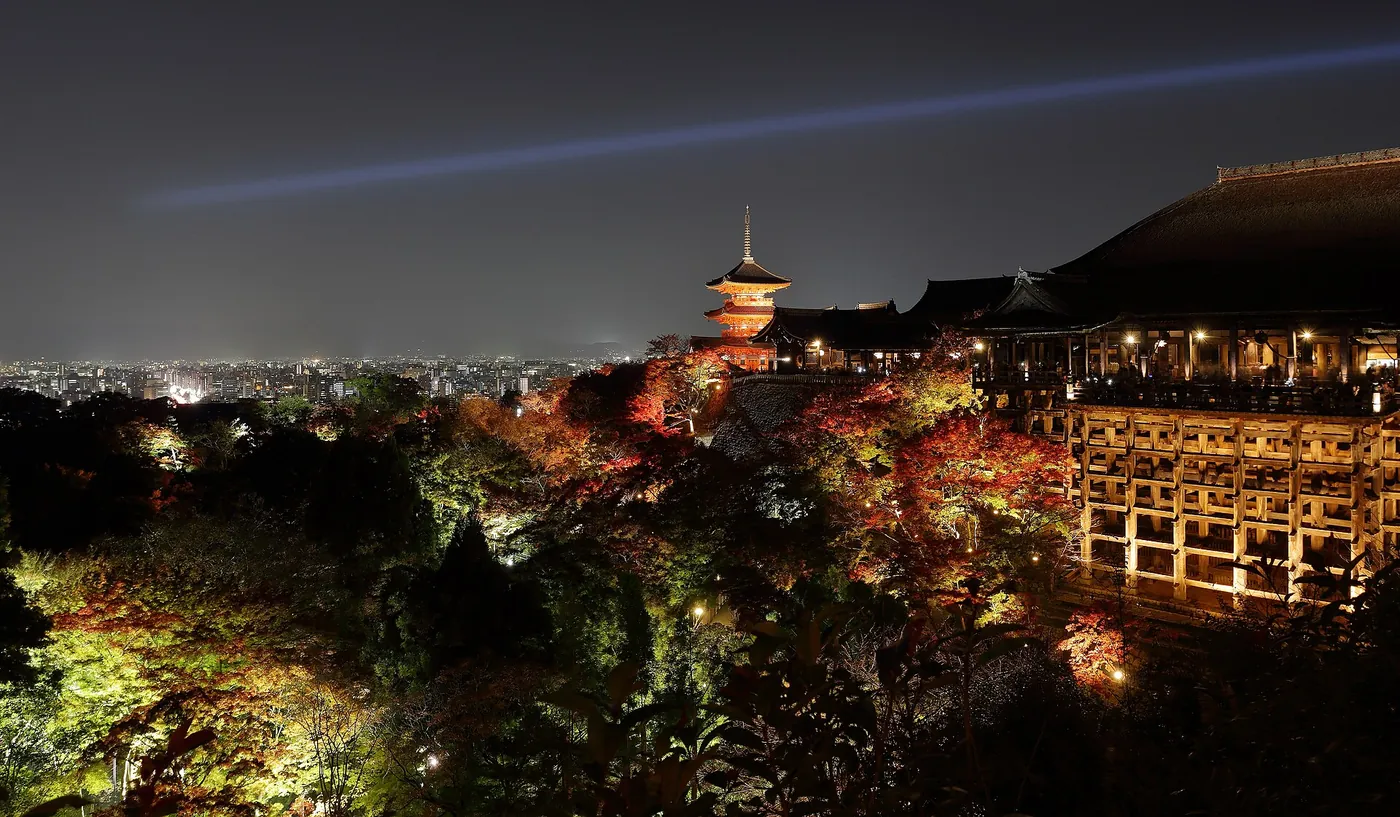
Photo: Martin Falbisoner / CC BY-SA 4.0 (resized) · Wikimedia Commons
ADThis article contains affiliate links. If you book through them, we may earn a commission at no extra cost to you. How we make money
How to visit Kiyomizu-dera in Kyoto. The 2026 hours, the autumn evening opening from November 21 to 30, the bus routes and walks, the Jojuin garden fee, the buildings in walking order and the rules.
Kiyomizu-dera stands halfway up Mt. Otowa in Kyoto's Higashiyama hills. Its main hall has a wooden stage built out over the cliff, with a view over the city. The temple says it is more than 1,250 years old.
This guide follows the temple's official English pages (Visit, Location, FAQ and news).
The short answer
- Opens at 6:00 a.m. every day. Closing is 6:00 p.m. for most of the year (6:30 p.m. in summer).
- Autumn evening opening: November 21 to 30, 2026, from 5:30 p.m. to 9:30 p.m. (last entry 9:00 p.m.). No reservation is needed.
- Getting there: from the nearest bus stops it is about 10 minutes on foot, up the hill.
- No car park, and no bicycles inside.
Booking ahead? See dates and prices for the Tea ceremony near Kiyomizu-dera on GetYourGuide Advertisement link
Opening hours in 2026
The temple opens at 6:00 a.m. Closing times change with the season:
| Dates | Hours |
|---|---|
| Jan 1 – Mar 26 | 6:00 – 18:00 |
| Mar 27 – Apr 5 (spring night viewing) | 6:00 – 21:30 (last entry 21:00) |
| Apr 6 – Jun 30 | 6:00 – 18:00 |
| Jul 1 – Aug 13 | 6:00 – 18:30 |
| Aug 14 – 16 (summer night viewing) | 6:00 – 21:30 (last entry 21:00) |
| Aug 17 – 31 | 6:00 – 18:30 |
| Sep 1 – Nov 20 | 6:00 – 18:00 |
| Nov 21 – 30 (autumn night viewing) | 6:00 – 21:30 (last entry 21:00) |
| Dec 1 – 31 | 6:00 – 18:00 |
The temple notes that the periods of special night opening change every year.
Autumn 2026: the evening visit
The temple's notice, dated October 29, 2026, announces:
- Evening Special Visit: Saturday, November 21 to Monday, November 30, from 5:30 p.m. to 9:30 p.m., with last entry at 9:00 p.m. No reservations are required.
- Special viewing of the Jojuin garden, known as the Moon Garden, on the same dates:
- Daytime: 9:00 a.m. to 4:00 p.m. (last entry)
- Evening: 6:00 p.m. to 8:30 p.m. (last entry)
- Admission: ¥600 for adults and ¥300 for elementary and junior high school students.
- The notice adds that an admission fee is also required to enter the temple grounds.
The temple's English pages that we could read do not list the regular admission fee, so check the temple's site for the current price before you go.
The temple says the best time for autumn leaves is mid-November to early December, but that it differs every year. The temple has about 1,000 trees that turn colour in autumn, and about 1,500 cherry trees. Check its news page for updates.
Getting there
There are only two routes into the grounds: the path up Kiyomizu-zaka to the Nio-mon gate, and the emergency road entrance at the top of Chawan-zaka. The temple warns that some map apps, including Google Maps, may show a route that does not reach the grounds.
From Tokyo: about 2 hours 15 minutes by Nozomi on the Shinkansen to Kyoto Station. See our guide to booking the Shinkansen on SmartEX.
In Kyoto, the temple lists:
| From | How |
|---|---|
| JR Kyoto Station | City bus 206 (bound for Kitaoji Bus Terminal) or 100 (bound for Ginkaku-ji), get off at Gojozaka, walk 10 minutes east. On Saturdays and holidays, Kyoto Bus 18 also stops at Gojozaka |
| Hankyu Kyoto-Kawaramachi / Keihan Gion-Shijo | City bus 207 (bound for Kujo Shako), get off at Kiyomizu-michi, walk about 10 minutes. Keihan buses 83, 85, 87 and 88 also serve Kiyomizu-michi and Gojozaka |
| Keihan Shichijo | City bus 206 or 100 to Gojozaka, then 10 minutes |
| Keihan Kiyomizu-Gojo Station | About 25 minutes on foot |
Our guide to buses and subways in Kyoto covers fares and passes.
Parking: the temple has no car park. Nearby city car parks and private spaces fill up in busy seasons, and the temple strongly recommends public transport or a taxi.
The grounds in walking order
The temple's map numbers these:
- Nio-mon. The main entrance, a two-story gate about 14 metres high. It was burned in a civil war in 1469 and rebuilt around 1500.
- Sai-mon (west gate). Rebuilt in 1633. It has long been a place to watch the sunset, and is known as a gateway to Paradise.
- Zuigu-do. Built in 1735. It enshrines a hidden Buddhist image and deities of matchmaking, safe birth and child rearing. A tour of the area beneath the hall, called Tainai meguri, is offered here.
- Hondo (main hall). Rebuilt in 1633 on the steep cliff. The principal image, the Eleven-headed Thousand-armed Kannon, is enshrined at the back. It was built solidly enough to support the stage.
- Okuno-in. It stands directly above Otowa Waterfall and has its own stage. From here you see the main hall's stage and the city, and the temple says it is a favourite for photos.
- Otowa Waterfall. The temple's name comes from the purity of this water. Visitors catch the three streams with ladles and pray for purification and for their wishes to come true.
- Jojuin. A sub-temple known for its Moon Garden, which is open to the public only for a limited time each year.
Rules and facilities
From the temple's FAQ:
- No pets, except service dogs.
- No bicycles as a rule. A small bicycle area is next to the restroom at the emergency road entrance on Chawan-zaka. The street in front of the main gate is closed to traffic from 8:00 a.m. to 7:00 p.m.
- Group photos for school trips or tours are allowed only in designated areas.
- Wheelchairs: barrier-free routes reach the main hall, and the temple map is at Todoroki-mon gate. You cannot borrow wheelchairs at the temple.
- Strollers can use the same barrier-free routes, and the wheelchair-accessible restrooms have space to change diapers.
- Free Wi-Fi (KYOTO Wi-Fi) is available.
- Visitors with a disability handbook can enter free along with one companion. Groups get no discount.
Before you go
- Check the closing time for your date: 18:00 for most of the year, and 21:30 from Nov 21 to 30
- Check the admission fee on the temple's site (it is not on the English pages)
- Do not rely on a map app: follow the signs to Nio-mon
- Wear comfortable shoes for the uphill walk
- Come early in the morning to avoid the busiest hours
- Plan other temples nearby: see Kyoto temple hours in autumn 2026
Tours and experiences nearby
The temple is simple to visit on your own. If you have only one day in Kyoto, Klook lists a full-day tour that covers Arashiyama, Fushimi Inari and Kiyomizu-dera.
Also on Klook: Kyoto full-day tour with Kiyomizu-deraAdvertisement link
GetYourGuide lists a tea ceremony in a tea house near the temple, which pairs well with a visit. It is a separate activity and is not run by the temple.
Staying overnight in Kyoto
If you would rather stay in Kyoto than travel back the same day, Klook lists hotels there. We have not stayed at or reviewed these hotels, so compare the price with the hotel's own website and with other booking sites before you pay.
Make it a splurge
To link Kiyomizu-dera with Fushimi Inari, Kinkaku-ji or Arashiyama in one day, a private tour gives your group a guide and a car. See our Kyoto private tour guide.
Sources
- Kiyomizu-dera: Visit (grounds and events)
- Kiyomizu-dera: Location (hours, access, parking)
- Kiyomizu-dera: FAQ
- Kiyomizu-dera: The Evening Special Visit, autumn 2026
- Kiyomizu-dera: Special viewing of the Jojuin garden, autumn 2026
Official information checked on November 11, 2026.
Prices change
Prices, exchange rates and rules in this article were checked on the date shown above. They can change at any time, so please confirm on the official website before you book or buy.
Been here? Was it worth it?
Please vote only if you have visited.