Meiji Jingu: Hours by Month, Access From Harajuku and What to Know Before You Go
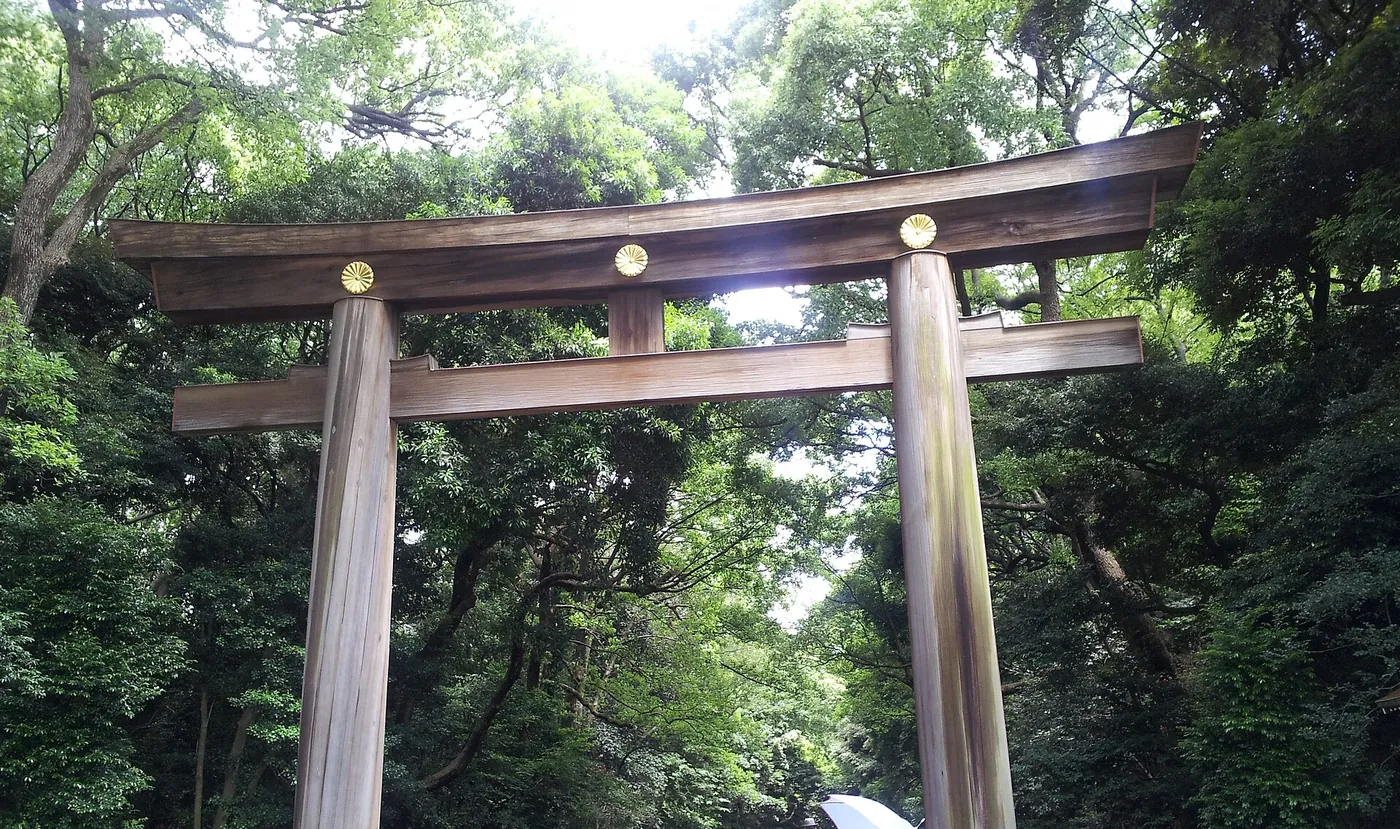
Photo: Nightcrafter / CC BY-SA 4.0 (resized) · Wikimedia Commons
ADThis article contains affiliate links. If you book through them, we may earn a commission at no extra cost to you. How we make money
Meiji Jingu is free and opens at sunrise and closes at sunset. The hours for every month, the four stations nearby, the Inner Garden and museum fees, the forest, and the rules for photos and eating.
Meiji Jingu is a Shinto shrine in a large, man-made forest next to Harajuku. It is one of the easiest places to step out of the city in Tokyo: the shrine entrance is about a minute from the station, and a wide path leads in under the trees.
This guide follows the shrine's own English site and Q&A.
The short answer
- It is free. There is no admission fee for the shrine. A few facilities, such as the museum, charge.
- It opens at sunrise and closes at sunset. In November that is 6:10 am to 4:10 pm, so go in the morning.
- Allow about 1 hour for the shrine alone, or about 2 hours with the Inner Garden and the museum.
- From the station gate, it is at least 10 more minutes on foot to the main shrine buildings.
Rather go with a guide? See dates and prices for the Meiji Jingu & Shinto culture walking tour on GetYourGuide Advertisement link
Opening hours
The shrine says it is open every day throughout the year, free of charge, from sunrise to sunset:
| Month | Opens | Closes |
|---|---|---|
| January | 6:40 am | 4:20 pm |
| February | 6:20 am | 4:50 pm |
| March | 5:40 am | 5:20 pm |
| April | 5:10 am | 5:50 pm |
| May | 5:00 am | 6:10 pm |
| June | 5:00 am | 6:30 pm |
| July | 5:00 am | 6:20 pm |
| August | 5:00 am | 6:00 pm |
| September | 5:20 am | 5:20 pm |
| October | 5:40 am | 4:40 pm |
| November | 6:10 am | 4:10 pm |
| December | 6:40 am | 4:00 pm |
Some places and facilities inside have shorter hours, mainly 9:00 am to 4:00 pm. In winter the day is short, so plan to enter early.
Getting there
The shrine lists four stations and the walk to the shrine entrance:
| Station | Lines | Walk |
|---|---|---|
| Harajuku / Meiji-jingumae | JR Yamanote Line; Tokyo Metro Chiyoda Line | 1 min |
| Sangubashi | Odakyu Line | 3 min |
| Yoyogi | JR Yamanote Line, JR Chuo-Sobu Line, Toei Oedo Line | 5 min |
| Kita-sando | Tokyo Metro Fukutoshin Line | 5 min |
Those times are to the entrance of the grounds. The shrine adds that it takes at least another ten minutes to walk from the entrance to the main shrine buildings. The grounds have three entrances on its map: Harajuku, Sangubashi and Yoyogi.
- Bicycles and motorcycles are not allowed inside. Leave them in the parking area at the entrance.
- Wheelchairs are available at the entrance.
- There is no place to store suitcases inside the grounds.
If you are using several trains in one day, see our guides to Suica and Welcome Suica and the Tokyo Subway Ticket.
What to see
The forest
The forest around the shrine looks natural but is man-made. About 110,000 volunteers planted it in honour of Emperor Meiji and Empress Shoken, with trees donated from all over Japan, and it was planted in 1920. It covers 70 hectares and now has 234 varieties of trees. Because it is considered sacred, there has been no human intervention since it was created: fallen trees are left to return to the soil.
The shrine grounds
- The torii gates mark the boundary between the everyday world and the sacred area.
- Sake barrels line the South Approach.
- The purification font is near the main sanctuary, for visitors to use before they enter the sacred area.
- Ema are votive tablets on which visitors write their wishes and thanks.
- The goshuin counter (the memorial seal) is near the main shrine building. The shrine also offers goshuincho books.
The Inner Garden
The Inner Garden was once Imperial property. The shrine asks for a ¥500 contribution to maintain it. It has the South Pond, Kiyomasa's Well and Kaku-un-tei. The shrine highlights azaleas in spring, irises in mid-June, and Japanese maples in late autumn.
The museum
The Meiji Jingu Museum opened in 2019 and was designed by architect Kengo Kuma, who also designed Tokyo's New National Stadium. It shows articles used by or associated with Emperor Meiji and Empress Shoken on two floors.
- Hours: 10:00 to 16:30 (last admission 16:00)
- Closed: Thursdays
- Admission: ¥1,000 for adults, ¥900 for high school students or younger
- The Tokyo Pass gives entry.
Rites and events
Rituals are held every day and every month: Nikku-sai daily at 8 am and 2 pm, and Tsukinami-sai at 9 am on the 1st and 15th of each month. Private prayers (Kigansai) can be requested.
In November, the shrine lists:
- November 1, 10 am: a ceremony for the anniversary of the shrine's founding in 1920
- November 2 and 3, 10 am: the Autumn Grand Festival, marking Emperor Meiji's birthday on November 3
- November 23, 10 am: Niiname-sai, the harvest festival
On December 31, the Great Purification Ceremony is held at 2 pm and the year-end ritual, Joya-sai, at 4 pm.
Rules and etiquette
From the shrine's notice and Q&A:
- Do not take photos or videos at the main sanctuary, where people are praying. Please also do not photograph the amulet office.
- No videos or promotional photography without permission, and no drones.
- Do not run or play sports.
- Eat, drink or smoke only in the designated areas.
- Stay on the path in the forest, and do not take living things, flowers, branches or nuts into or out of it.
- You do not have to be a Shinto believer to enter.
Payments: the restaurants and gift shop take credit cards. The amulet office, the Kaguraden and the goshuin counter do not. Wi-Fi is available in the restaurants and gift shops. There are no official guided tours in other languages.
Before you go
- Check the closing time for your month: in November it is 4:10 pm
- Choose your station: Harajuku is the closest
- Bring cash for the goshuin and the Inner Garden
- Leave bicycles outside and your suitcase somewhere else
- Do not photograph the main sanctuary while people are praying
- Allow 1 hour, or 2 with the garden and museum
Going with a guide
The shrine is free and open to walk through on your own. For background on Shinto and the shrine's history, GetYourGuide lists a guided walking tour.
Klook lists a similar walking tour. Compare the length, group size and price before you choose.
Also on Klook: Meiji Shrine walking tourAdvertisement link
Make it a splurge
For a local guide for your group only, a private walking tour of Tokyo (4 to 8 hours, routes you choose) was rated 5.0 from about 660 reviews when we checked on November 19, 2026.
Sources
- Meiji Jingu: How to visit (opening hours)
- Meiji Jingu: Access
- Meiji Jingu: Q&A
- Meiji Jingu: Etiquette
- Meiji Jingu: What to see (forest, garden, museum, rites and events)
Official information checked on November 11, 2026.
Prices change
Prices, exchange rates and rules in this article were checked on the date shown above. They can change at any time, so please confirm on the official website before you book or buy.
Been here? Was it worth it?
Please vote only if you have visited.